

Travel Money Guide
Stop Paying Extra For Checked Bags
A practical look at how travelers can cut or avoid luggage charges by planning ahead, packing smarter and reading the fine print.
If you want to stop paying extra for checked bags, the first step is to understand that the fee is rarely an accident. It is a deliberate part of how many airlines structure their fares, and it often shows up only after the ticket price has already caught your eye. A fare that looks like a bargain can look quite different once a suitcase is added at checkout, particularly on a round trip or for a group traveling together. The good news is that checked bag charges are, in many cases, avoidable. With some planning before you book, a realistic look at what you actually need to bring, and a careful reading of each airline’s own rules, many travelers can reduce or eliminate this cost without sacrificing comfort or convenience on the trip.
Why Checked Bag Fees Feel So Hard to Avoid
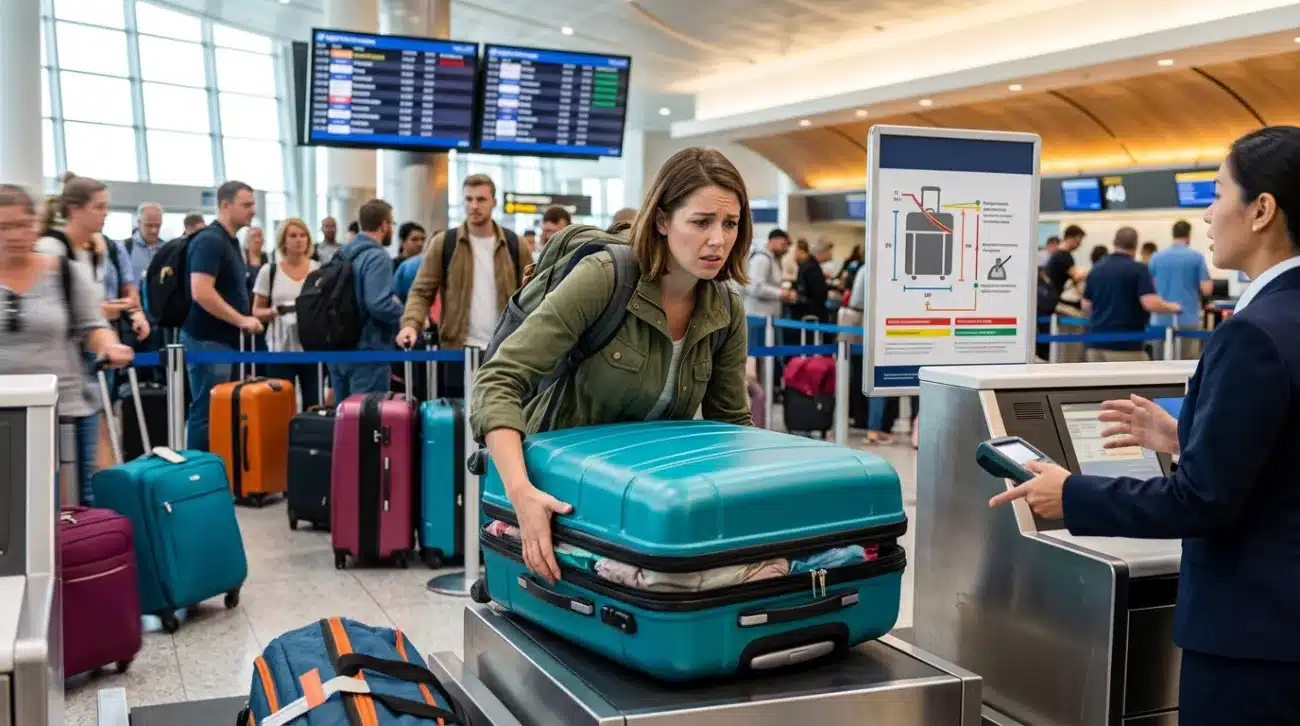
Airlines commonly separate the price of the seat from the price of services such as luggage, seat selection and onboard extras. This approach, often called unbundling, lets a carrier advertise a lower headline fare while charging separately for anything beyond the basics. For the traveler, the practical effect is that the cheapest-looking fare is not necessarily the cheapest trip. Comparing two airlines on ticket price alone can be misleading if one includes a bag and the other does not.
Because policies differ from one airline to another, and sometimes between fare types on the same airline, there is no single rule that applies everywhere. Fees can also depend on the route, whether the flight is domestic or international, and how many bags you bring. The only dependable source for the exact amount is the airline’s own baggage page for your specific itinerary. Treat any figure you read in a general article, including this one, as a reason to check rather than as a final answer.
It also helps to think in terms of the total cost of the journey. A traveler who adds a bag in each direction pays that fee twice, and the cost multiplies when several people travel together. Seen this way, a modest-looking charge can become a meaningful part of the overall travel budget, which is why it deserves attention before you press the purchase button rather than after.
Compare the Total Fare Before You Book Your Flight
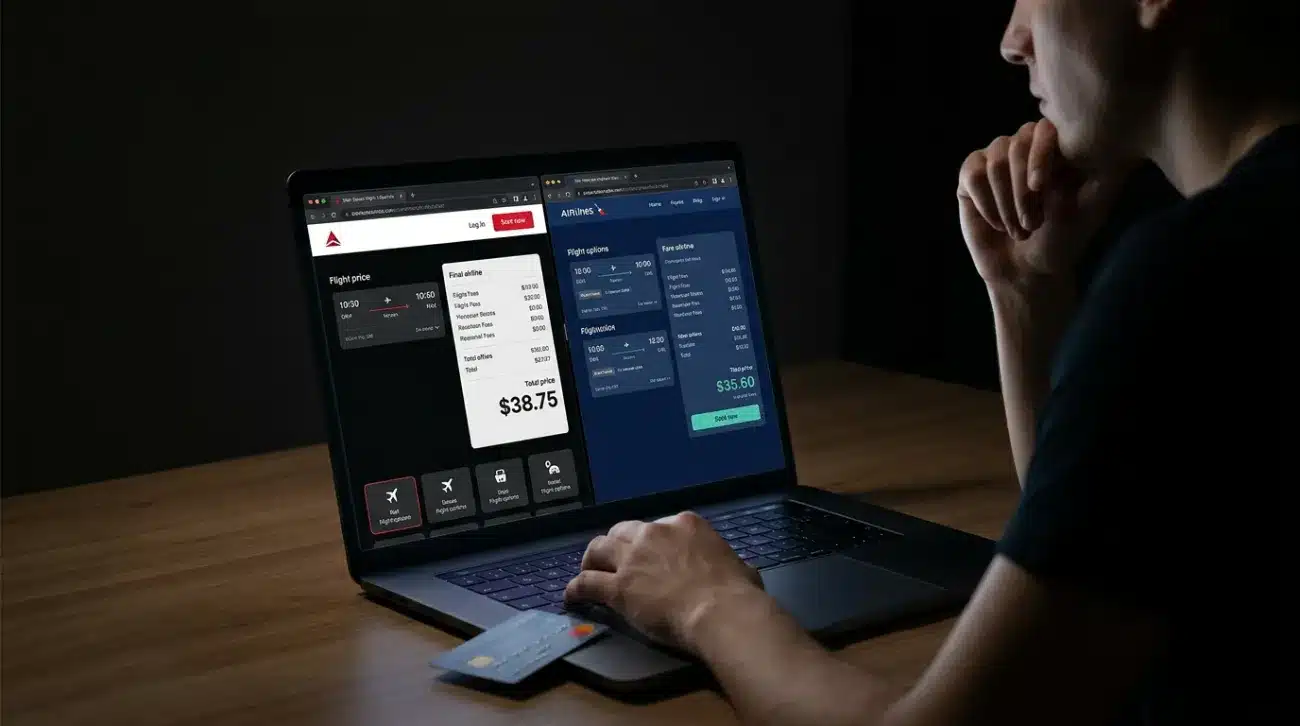
The simplest way to stop paying extra for checked bags is to include them in your comparison from the start. Before choosing a flight, decide whether you will need a checked bag at all, then price each option with that bag included. Airline websites and many booking platforms allow you to view fare details that spell out what each ticket type covers. Reading these details takes a few minutes and can prevent an unwelcome surprise later.
Many airlines sell several versions of the same seat, ranging from a stripped-down basic fare to a higher fare that bundles extras. Sometimes the higher fare includes a bag and the price difference is smaller than the bag fee would be on its own; in other cases the reverse is true. The only way to know is to run the numbers for your particular trip. A short calculation comparing the cheapest fare plus the bag fee against the next fare up will show which option is genuinely less expensive.
It is also worth checking when and where the airline charges for the bag. Some carriers list different prices depending on whether you pay during booking, after booking or at the airport. Because these policies are set by each airline and can change, confirm the current terms on the airline’s website rather than relying on memory or on advice from a forum post that may be out of date.
Packing Light With a Carry-On and Personal Item

For many trips, the most reliable way to avoid luggage charges is simply not to check a bag. Most airlines allow a small personal item that fits under the seat, and many also allow a larger carry-on that goes in the overhead bin, though the rules vary by airline and fare type. Some of the most restrictive fares limit passengers to a personal item only, so it is important to confirm what your ticket allows before you pack and before you travel.
Every airline publishes maximum dimensions and, in some cases, weight limits for cabin baggage. Measure your bag against those published numbers rather than trusting the size printed on the manufacturer’s label, since a bag marketed as carry-on size may not match a particular airline’s limit once it is fully packed. A bag that is overstuffed or that has bulging pockets can be challenged at the gate, and gate-checking a bag may result in a fee depending on the fare.
Packing light is as much a habit as a skill. Choosing a limited color palette so that clothing can be mixed and matched, wearing the bulkiest shoes and jacket on the travel day, and planning to do laundry on longer trips are widely used approaches among frequent travelers. Rolling clothes, using packing cubes and keeping toiletries within the security rules for liquids can also help a week-long trip fit comfortably into a single cabin bag. None of these methods is guaranteed to work for every traveler, but together they can make a carry-on-only trip realistic for many itineraries.
Loyalty Status and Airline Credit Cards That Waive Bag Fees

Some airlines extend checked bag benefits to members of their loyalty programs who reach certain status levels, and some co-branded airline credit cards advertise a free checked bag for the cardholder and, in certain cases, for companions on the same reservation. These perks are set by each airline and card issuer, and they can differ in who qualifies, how many bags are covered and which tickets the benefit applies to. They can also change over time, so the current terms on the airline’s website and the card issuer’s materials are the only reliable guide.
Before applying for a card with this benefit in mind, it makes sense to weigh the card’s annual fee and other costs against the bag fees you would realistically save. A traveler who flies several times a year on one airline and normally checks a bag may find the arithmetic favorable, while an occasional flyer may not. Read the full terms, confirm exactly how the checked bag benefit is triggered, such as whether the ticket must be purchased with the card, and treat any promotional description as a starting point rather than a guarantee.
Loyalty benefits are most useful when they match how you actually travel. Spreading flights across many airlines can make it hard to build status with any single carrier, while concentrating trips on one airline may unlock perks but could mean paying more for individual tickets. Only you can judge which side of that trade-off makes sense, and the answer may change from year to year.
Other Ways to Move Luggage Without Airline Bag Fees

When a trip genuinely requires more belongings than a cabin bag can hold, there are alternatives to paying the airline. Luggage shipping services and standard parcel carriers will send bags ahead to a hotel, a rental property or a cruise terminal arrangement, subject to each provider’s rules. Whether this is cheaper than a checked bag depends on the size and weight of the shipment, the distance and the speed you choose, so it is worth getting a quote and comparing it with the airline’s published charge.
Cruise passengers face a slightly different version of the same question. Because a cruise itinerary often involves a flight to the departure port, the airline’s baggage rules still apply to the flying portion, while the cruise line has its own policies for what can be brought aboard. Checking both sets of rules in advance helps avoid duplicate costs and any problems at the terminal.
Another option is to buy or rent items at the destination rather than carrying them. Beach gear, bulky winter items and some toiletries can often be purchased locally, which may cost less than the combined effect of a bag fee and the effort of hauling extra items through airports. This will not suit every traveler or destination, but it is worth considering before defaulting to a second suitcase.


