How Seniors Can Travel Safely Alone
Health planning, medication care, emergency registration and everyday habits that help older adults explore independently.
Traveling solo later in life is a growing ambition for many older adults, and understanding how seniors can travel safely alone starts with preparation rather than fear. Public health agencies and geriatric organizations publish practical guidance covering medical checkups, vaccinations, medicines, emergency registration and daily habits on the road. This article draws on guidance from the Centers for Disease Control and Prevention (CDC), the American Geriatrics Society’s Health in Aging Foundation, the National Council on Aging (NCOA) and AARP to outline how an independent traveler aged 50 or older can reduce avoidable risks before and during a trip.
Start With a Pretravel Health Visit and a Realistic Itinerary
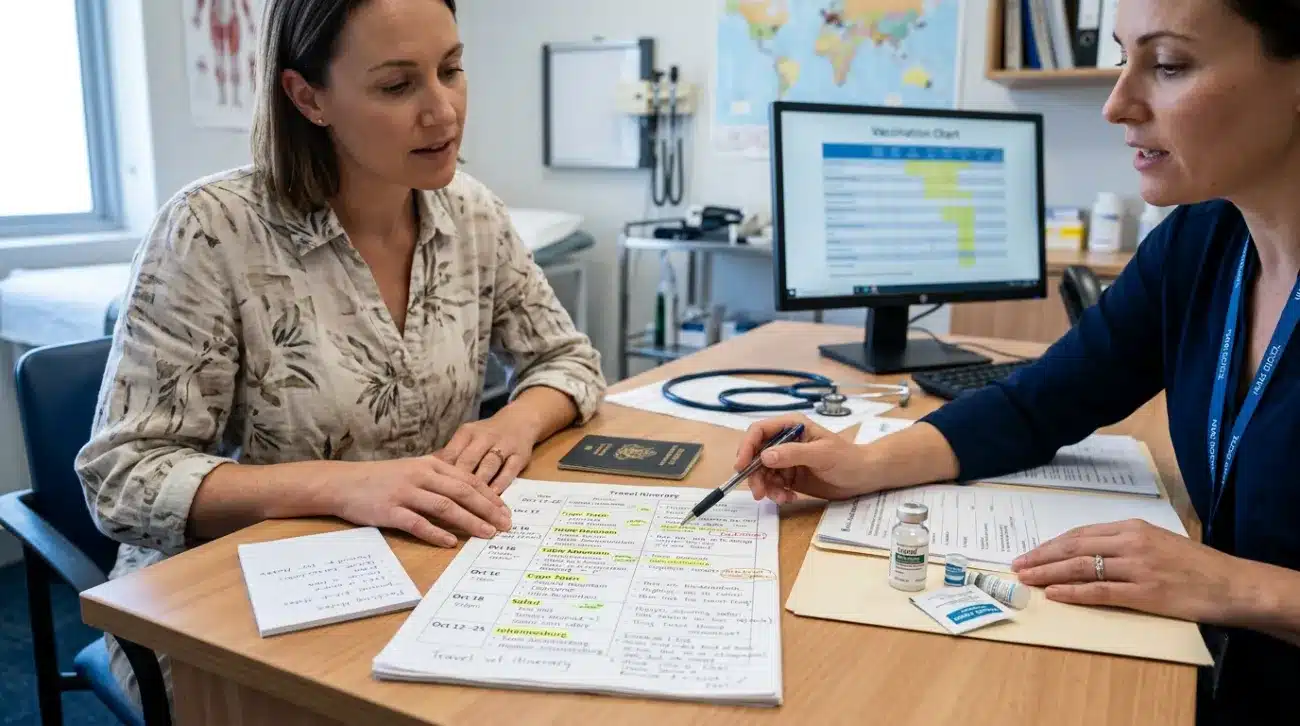
The CDC’s guidance for older adults begins with an appointment. It advises scheduling a visit with a healthcare provider or travel health specialist at least four to six weeks before departure, so that destination-specific vaccines, medicines and information can be arranged. AARP, citing the CDC and the World Health Organization, describes a similar pretravel window of four to eight weeks. Allowing that much time is particularly useful for a solo traveler, who has no companion to help manage last-minute medical questions.
The CDC suggests telling the provider about several specifics: any chronic medical conditions, such as hypertension or asthma; every destination on the route; the types of accommodation, including hotels, hostels, short-term rentals, boats or camping; the purpose, timing and length of the trip; and planned activities. Examples the agency gives include climbing at high altitude, scuba diving and taking cruises. Travelers should also share a full list of the medications they take. The more detailed the itinerary, the more tailored the advice can be.
The American Geriatrics Society’s Health in Aging Foundation adds a note on paperwork. Its tip sheet recommends having healthcare providers’ contact information in writing, including for emergency purposes, rather than relying only on a phone that could be lost or run out of battery.
Vaccinations and Medication Safety for Older Solo Travelers

Routine immunizations are part of the CDC’s checklist for older adults. The agency lists the pneumococcal pneumonia vaccine, the zoster (shingles) vaccine and an annual flu shot among the routine vaccines for this age group, and it asks travelers to make sure they are up to date. The NCOA, in its guidance on traveling during flu season, notes that the CDC recommends pneumococcal vaccination for adults 50 or older. It also states that the CDC recommends an RSV vaccine for all adults ages 75 and older, and for adults ages 50 to 74 who are at increased risk for severe RSV. The NCOA suggests getting vaccinated at least two weeks before travel to give the body time to build protection.
Destination-specific vaccines are a separate matter. AARP points out that a country’s entry rules and its actual health risks do not always match. Brazil, for example, has no vaccination entry requirement, yet the CDC still recommends a vaccine for travelers heading to many of its states because of disease exposure. For this reason, checking the CDC’s destination pages is more reliable than assuming that the absence of a border requirement means the absence of risk. AARP also directs readers to the CDC’s Find a Clinic tool and the CDC Yellow Book for pretravel guidance. The CDC further advises carrying a copy of official immunization records.
Medicines deserve equal attention. The CDC tells travelers to take prescribed medicine as directed before, during and after the trip. It warns that counterfeit drugs are common in some countries, so it recommends bringing only medicine from home and packing enough for the full trip plus extra in case of delays. For those crossing time zones, the Health in Aging Foundation suggests asking a healthcare provider in advance whether to keep taking medicines on home-time-zone hours or switch to local time.
Staying Connected: Emergency Registration and Check-Ins

For U.S. citizens, the CDC’s older-adult page points to the Smart Traveler Enrollment Program, known as STEP. According to the CDC, enrolling ensures the U.S. Department of State knows where a traveler is if serious legal, medical or financial difficulties arise. If an emergency occurs at home, the CDC adds, STEP can also help friends and family contact the traveler. For someone traveling alone, that second function can matter as much as the first.
Communication habits are a recurring theme in consumer guidance. A home-care provider’s blog for seniors, Bright Star Care, recommends sharing an itinerary with family or friends and checking in regularly. It also suggests considering a phone with international coverage or a local SIM card. These are practical suggestions from a commercial care provider rather than official regulations, but they align with the CDC’s broader emphasis on making sure someone knows where a solo traveler is.
Healthy Habits on the Road: Hydration, Hygiene and First Aid

Once the trip is underway, the Health in Aging Foundation’s tip sheet offers straightforward habits. It recommends washing hands or using an alcohol-based hand sanitizer, especially after time on a crowded plane, train or bus and before eating. It advises using common sense when choosing food and drink, avoiding brushing teeth with water that is not safe to drink, and drinking plenty of water while traveling, especially by plane. It points readers to the CDC’s country-by-country information on illnesses linked to food and water.
The CDC also encourages older travelers to learn basic first aid and CPR before leaving, to bring a travel health kit, and to learn the emergency service numbers for the destination. These steps are especially relevant for solo travelers, who may need to act quickly on their own behalf or explain a situation to local responders. AARP quotes an infectious disease specialist, Dr. Ben-Aderet, as saying that medical care abroad can vary by location, which is why it is worth thinking about the options at a destination, particularly for travelers with existing health conditions.