How To Handle Medical Emergencies Abroad
Essential preparation and response strategies for travelers facing health crises far from home
Understanding Cruise Ship Medical Facilities and Capabilities
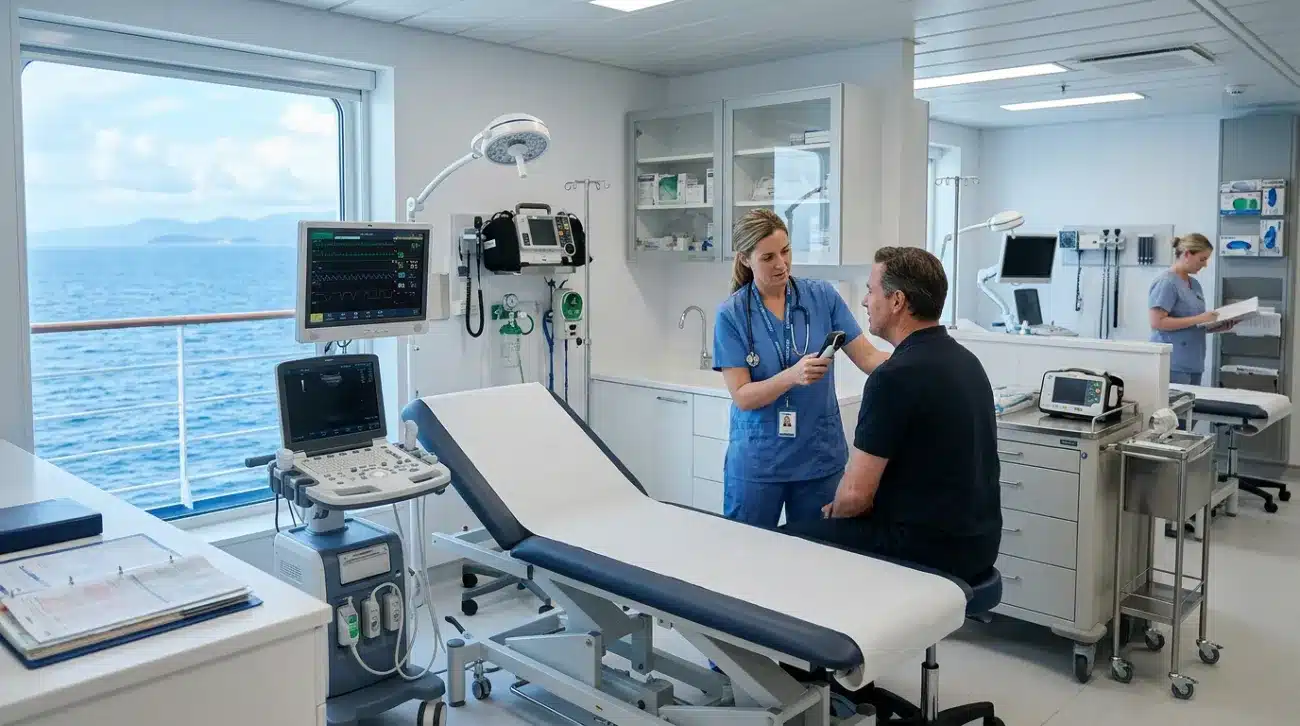
Cruise ships function as floating communities with thousands of passengers, and major cruise lines have developed medical infrastructure to address the inevitable health concerns that arise at sea. According to the CDC Yellow Book for 2026, travelers at sea might need to rely on a ship’s medical capabilities for an extended period, making it essential for people with preexisting conditions to prepare accordingly. The onboard medical facilities are designed primarily for stabilization and emergency care rather than comprehensive treatment, which means understanding their limitations is critical for any cruise passenger.
Royal Caribbean, one of the world’s largest cruise operators, maintains specific staffing standards across its fleet. Each Royal Caribbean Group ship has two to three licensed doctors and three to five licensed nurses available to passengers and crew members around the clock, depending on the size of the vessel and number of people aboard. These medical facilities include cardiac monitors, automated external defibrillators, ventilators, x-ray machines, laboratory equipment, and a variety of acute care medications and surgical supplies. Royal Caribbean requires all doctors and nurses to maintain Advanced Cardiac Life Support training, and physicians have access to online informational resources and 24-hour support from shoreside medical professionals.
Other major cruise lines follow similar protocols. Holland America ships feature onboard Medical Centers staffed by licensed physicians and critical care nurses that meet or exceed guidelines established by the American College of Emergency Physicians. While not functioning as full-service hospitals, these facilities are well equipped to handle most emergencies and routine medical procedures. MSC Cruises equips its ships with fully equipped medical centers designed to handle a wide range of medical situations, following international maritime health regulations for both routine and emergency care.
The cost of onboard medical care, including clinician exams, tests, and medications, is typically not included with a voyage’s expense. Medical services are billed to your onboard account and can be quite expensive, making travel insurance that covers emergency medical and evacuation costs essential for any cruise passenger.
When Medical Evacuation Becomes Necessary

When a medical situation exceeds the capabilities of a ship’s medical facility, evacuation becomes a medical mandate. The ship’s medical staff will determine whether treatment can continue onboard or whether urgent medical evacuation is required. This process was recently demonstrated when Royal Caribbean’s Oasis of the Seas had to change course in September 2026 after medical staff determined that two guests needed urgent medical attention. One emergency reportedly involved a critically ill child, prompting the ship to return to Nassau, the closest port with a hospital. Both passengers were successfully disembarked to receive additional medical care.
Medical evacuations from cruise ships can occur via helicopter when the vessel is within range of Coast Guard or military rescue services, or the ship may divert to the nearest port with adequate medical facilities. Coordinated by the ship’s medical staff with rescue agencies, medical evacuation may involve being transported by helicopter, often carried out by the Coast Guard in U.S. waters or sometimes by foreign military services when overseas. This method of evacuation transports the passenger rapidly to a more capable onshore hospital or medical facility for the necessary treatment.
The Critical Importance of Travel Medical Insurance Coverage

Perhaps the most consequential preparation any international traveler can make is securing adequate travel medical insurance. Many U.S. health plans offer limited or no coverage once you leave the country, leaving travelers vulnerable to staggering medical bills. The CDC notes that a medical air evacuation can cost anywhere from $25,000 to more than $250,000, depending on location, medical condition severity, and distance to appropriate facilities. Medical evacuations from cruise ships can cost upward of $250,000, according to the Centers for Disease Control and Prevention.
Travel medical insurance helps cover unexpected medical expenses if you get sick or injured outside your home country. Depending on the policy, coverage can include emergency treatment, hospitalization, emergency medical evacuation, prescription medications, and repatriation. Insurance experts recommend policies that offer at least $100,000 in emergency medical evacuation coverage, regardless of travel plans. Data from insurance claim analysis shows that medical evacuation is by far the costliest claim type, with claims averaging approximately $23,299.
Some health providers overseas may require payment before treating medical emergencies. Domestic health insurance might not provide the necessary payment prior to treatment overseas, and typically does not include travel assistance services or medical evacuation coverage. International travel medical insurance fills these critical gaps by covering emergency care abroad, out of state, and out of network, preventing travelers from being stuck with large medical bills.
Minimum recommended: $100,000. Higher limits advised for remote destinations like Alaska, Antarctica, or transatlantic crossings.
Recommended: $250,000–$500,000. This category is where costs can become catastrophic without adequate protection.
Covers transportation home after medical treatment if you cannot complete your original itinerary.
How U.S. Embassies and Consulates Assist During Health Crises

When a medical emergency occurs abroad, the nearest U.S. embassy or consulate can provide important assistance, though travelers should understand both the scope and limitations of this support. The nearest U.S. embassy or consulate can help travelers locate medical services and notify friends, family, or employers of an emergency. If a U.S. citizen becomes ill or is seriously injured abroad, a consular officer can assist in locating appropriate medical services and informing family or friends.
Embassy and consular officials can help you find local hospitals, clinics, doctors, and other medical services, as well as a local interpreter to navigate communication barriers in foreign healthcare settings. If necessary, a consular officer can also assist in the transfer of funds from the United States. Family or friends can send funds via the U.S. embassy or consulate through a money transfer program called “OCS Trust.”
However, payment of hospital and other expenses remains the responsibility of the traveler. The embassy will not pay any hospital or medical expenses on your behalf. For destitute U.S. citizens, the State Department may provide repatriation loans covering transportation expenses, temporary food and lodging, and medical expenses if needed to stabilize the citizen for return to the United States. The State Department can also arrange for the return of an injured American through commercial air ambulance, though all evacuation costs must be borne by the injured American or their family.
STEP is a free service that allows U.S. citizens traveling or living abroad to enroll with the nearest U.S. embassy or consulate. Registration enables the embassy to contact you directly in case of disaster, civil unrest, or family emergency, and helps family members back home get in touch with you. Enrollment is strongly recommended for all international travelers.